One more coin. The night is young.
Cabinet idle · one credit
The cabinet is still lit when the row starts emptying. There is one credit left. That is enough to learn when an enemy is about to change lanes, how much a bad landing costs and whether you can reach the last screen without giving up the route you practiced. Pixelurn Works makes arcade concepts built around this decision.
Press the coin button to turn the cabinet from its idle display to the game selection. The credit is a page control. You can use it without paying, registering or downloading anything. Both games also have direct links if you want to read their prototype rules without starting the display. The records below explain how each concept treats a recovery and decides which points belong to a run.
Save the landing after a bad jump
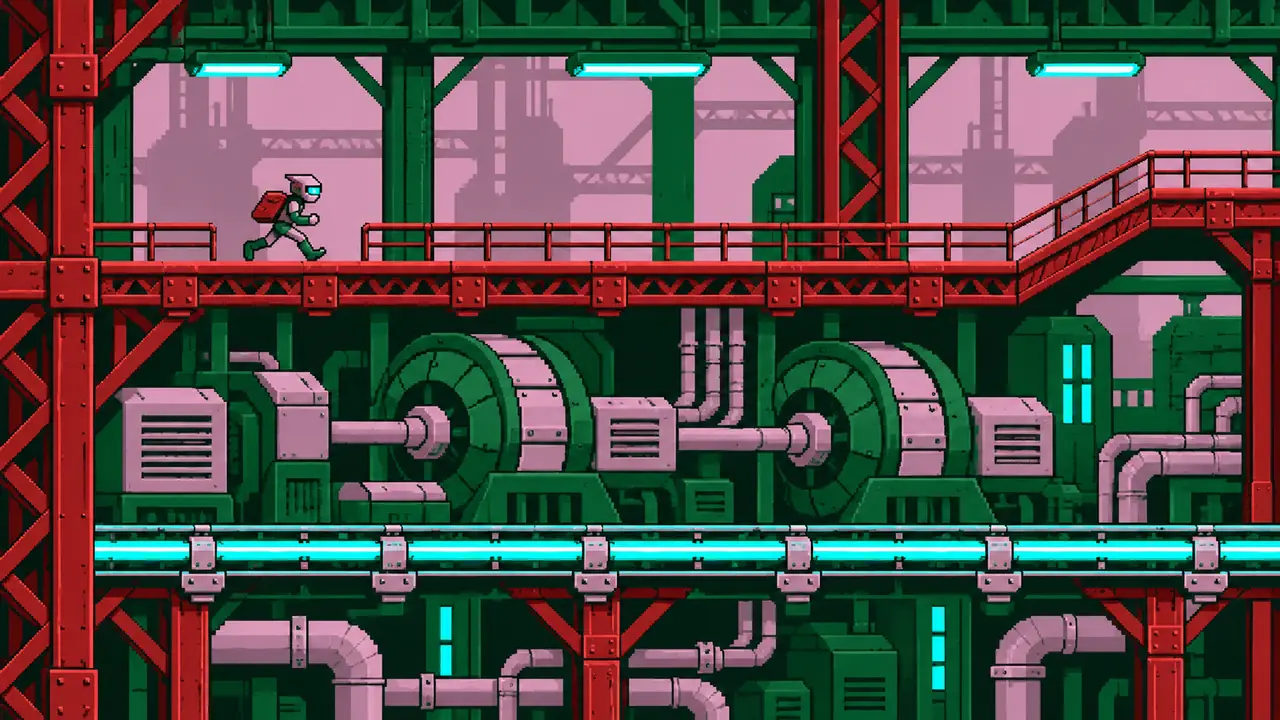
Side Rail follows a narrow walkway above maintenance machinery. A jump missed at the far lip can leave the player hanging from a lower rail. Letting go uses up time and limits your next approach. Pulling up puts you back in the way of an enemy that follows a visible cycle.
Midnight Stack takes place on a freight elevator. It asks you to place a container, move clear and wait for the next shelf to unlock. Dropping a container can close one corner of the elevator for the rest of the current stage. A later placement can preserve the run even if the first bonus is gone.
Read what earns a place on the board
The cabinet noticeboard explains which actions the prototypes score. It also records what we changed when an enemy turned too quickly to read or a scanline covered a narrow letter. The examples are scoring exercises. The board does not display a public record of real people or their initials.
The game selector lets you choose by the kind of decision you want to practice. Side Rail tests movement after a miss. Midnight Stack gives you a short floor plan with a line that keeps changing as the lift opens. Both reward learning a pattern well enough to make an adjustment when the previous move cannot be repeated. On the last credit, the adjustment is what keeps the next screen within reach.